Your house gets dusty quickly after cleaning because new particles keep entering your home, while everyday activities send settled dust back into the air. Common causes include dirty HVAC filters, gaps around windows and doors, pet dander, dust mites, fabric fibers, and cleaning methods that spread particles instead of removing them. Improving air filtration, sealing air leaks, and using the right cleaning tools can help keep dust under control.
Key Takeaways
- Household dust comes from outdoor particles, pets, fabrics, people, and everyday activities that resuspend settled dust.
- Replace HVAC filters regularly, control indoor humidity, and use damp microfiber cloths and HEPA-filtered vacuums to reduce dust buildup.
What Is Household Dust Made Of?
Household dust contains tiny particles from your family, pets, household materials, and the outdoors. Its composition varies from home to home, but identifying the common sources helps you understand how to control it.
- Outdoor dirt and pollen: Wind carries soil, pollen, and other particles indoors through open windows, doors, and small gaps. Shoes also track outdoor debris across your floors.
- Skin flakes and hair: People naturally shed dead skin cells and hair, which become part of household dust.
- Pet dander: Dogs and cats release tiny skin flakes and hair that collect on furniture, carpets, and other surfaces.
- Fabric fibers: Carpets, couches, towels, curtains, and blankets shed small fibers through everyday use.
- Dust mite waste: Dust mites live in bedding and upholstered furniture, feeding on dead skin cells. Their waste and body fragments contribute to household dust and allergens.
- Cooking and smoke: Frying, candles, fireplaces, and other combustion sources release fine particles that can settle on nearby surfaces.
Why Dust Comes Back So Fast
Your HVAC Filter Is Full
Your heating and cooling system circulates indoor air through an HVAC filter, which captures airborne particles before the air moves through the system. When the filter becomes clogged, airflow can decrease, and the system may become less effective at filtering the air.
Check your HVAC filter monthly and replace it according to the manufacturer’s recommendations. Many standard filters need replacement every 60 to 90 days, although homes with pets, heavy dust, or frequent HVAC use may need more frequent changes.
Look for the highest MERV-rated filter your HVAC system can safely accommodate. MERV 13 filters capture smaller airborne particles more effectively than MERV 8 filters, but some residential systems cannot handle higher-resistance filters. Check your system manual or consult an HVAC technician before upgrading.
Air Leaks Around Windows, Doors, and Ducts
Old window seals, gaps under doors, and leaky ductwork can allow outdoor dust, pollen, and other particles to enter your home. These small openings may go unnoticed but contribute to ongoing dust accumulation.
Dark lines along carpet edges and dusty areas near windowsills can sometimes indicate where outside particles are entering.
Seal gaps around window frames with appropriate caulk, add weatherstripping around doors, and install door sweeps where needed. If you suspect leaking ductwork in your attic or crawl space, ask an HVAC technician to inspect and seal it.
Your Cleaning Tools Spread Dust Around
Feather dusters and dry rags can knock settled particles into the air instead of trapping them. Older vacuums without effective filtration may also release fine particles through their exhaust.
Even walking across carpets, moving furniture, and vacuuming can temporarily resuspend settled dust. This explains why some particles appear on surfaces shortly after cleaning.
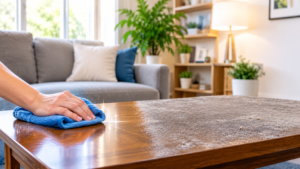
Use a slightly damp microfiber cloth because it captures dust more effectively than dry wiping. Work from top to bottom, cleaning shelves and furniture before floors. Finish by vacuuming with a well-sealed vacuum equipped with a HEPA filter to capture fine particles.
Pets and Dust Mites Keep Adding More
Pets shed dander and hair throughout the day, which collect on carpets, furniture, bedding, and other surfaces. Dust mites also contribute to household allergens, particularly in warm, humid environments.
Brush pets regularly, preferably outdoors when practical, and wash their bedding weekly. Vacuum carpets and upholstered furniture frequently to remove accumulated hair and dander.
Wash your sheets regularly using the hottest water recommended on the care label. Allergen-resistant covers for mattresses and pillows can also help reduce exposure to dust mite allergens.
Carpets, rugs, and couches can hold onto dust and dander that everyday vacuuming may not completely remove. Professional carpet and upholstery cleaning helps remove embedded buildup from these surfaces.
Dry Air and Poor Ventilation
Indoor humidity affects dust accumulation and indoor air quality in different ways. Dust mites thrive in warm, humid environments, while very dry air can increase static electricity, making dust cling to electronic screens and other surfaces.
Aim to keep indoor humidity between 30% and 50%. This range helps discourage dust mites and excess moisture while maintaining comfortable indoor conditions.
Good ventilation also matters. Run kitchen and bathroom exhaust fans while cooking and showering to remove excess moisture, odors, and indoor pollutants. Keep windows closed when outdoor pollen or dust levels are high.
Simple Habits That Keep Dust Down
Small daily habits can make a noticeable difference in how quickly dust builds up around your home.
Place sturdy doormats at entryways and encourage everyone to remove their shoes indoors. This reduces the amount of outdoor soil and debris tracked across floors.
Clutter, extra throw pillows, and heavy drapes create additional surfaces where dust can collect. Store smaller items in closed containers, wash curtains periodically, and clean decorative items regularly.
Vacuum high-traffic areas at least once or twice a week, depending on household activity. If you have pets or allergy sufferers at home, you may need to clean these areas more frequently.
Consider using an appropriately sized air purifier with a true HEPA filter in frequently occupied rooms. Check its Clean Air Delivery Rate (CADR) to ensure it can handle the room’s square footage. Run it regularly and replace filters according to the manufacturer’s instructions.
When to Call a Professional
If dust continues accumulating quickly despite regular cleaning, your home may need a more thorough cleaning routine or an inspection of its HVAC system and potential air leaks.
Professional cleaning reaches areas that everyday routines often miss, including baseboards, floor edges, furniture surfaces, and spaces underneath heavy furniture. It also helps remove accumulated dust, hair, and debris from frequently used areas.
Busy Brooms offers professional residential cleaning across the Louisville area, helping homeowners maintain cleaner living spaces through detailed, consistent cleaning.
Frequently Asked Questions
How often should I dust my house?
Most homes benefit from dusting at least once a week. Homes with pets, children, or allergy sufferers may need dusting two or more times a week. Focus on frequently used surfaces, bedrooms, electronics, and areas where dust collects quickly.
Do air purifiers help reduce dust?
Yes. Air purifiers with true HEPA filters capture airborne particles, including fine dust, pollen, and pet dander, before they settle on surfaces. Choose a purifier with a CADR suitable for your room size and run it regularly for better results. Remember that air purifiers do not remove dust that has already settled on furniture or floors, so regular cleaning is still necessary.
Should I leave my HVAC fan on to cut down on dust?
Running your HVAC fan continuously circulates air through the filter more often, which can help capture additional airborne particles. However, this increases electricity consumption and may affect humidity control during cooling. Check your system’s recommendations before switching your thermostat fan from “Auto” to “On” permanently.
Does opening the windows make my house dustier?
It can. Open windows allow outdoor particles, pollen, soil, and dust to enter your home, particularly on windy days or when outdoor pollen levels are high. Open windows when outdoor air quality is good and close them when pollen or dust levels increase.
Is household dust bad for your health?
Household dust can contain allergens and particles that trigger sneezing, itchy eyes, coughing, and asthma symptoms. Common triggers include dust mite waste, pet dander, pollen, and fine particles from cooking or smoke. If anyone in your household has allergies or asthma, prioritize cleaning bedrooms, bedding, carpets, and upholstered furniture to help reduce exposure.
How long does it take for dust to settle after cleaning?
Dust particles settle at different rates depending on their size, airflow, and indoor activity. Larger particles may settle relatively quickly, while finer airborne particles can remain suspended for hours. Damp dusting and vacuuming with proper filtration help reduce the amount of dust that gets redistributed.
Does professional house cleaning help reduce dust?
Yes. Professional house cleaning removes accumulated dust from surfaces, floors, baseboards, furniture, and other frequently overlooked areas. Regular cleaning helps control buildup, although dust will continue entering your home through everyday activities and outdoor sources.