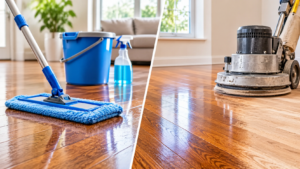
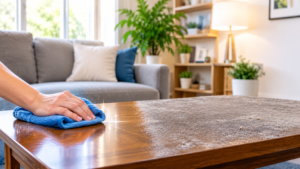
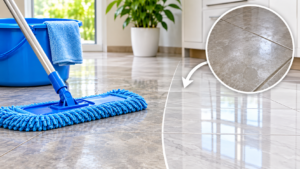
What we found when testing this: We tested a tile cleaner at a higher-than-recommended dilution and noticed that it left a faint, sticky film after drying, making the floor look dull even though it appeared clean while wet. Using the manufacturer’s recommended dilution, followed by a rinse with fresh water and a microfiber mop, removed the residue and improved the tile’s appearance. This showed how easily excess cleaning solution can contribute to buildup over repeated mopping.
Key Takeaways
- Use a pH-neutral cleaner formulated for your tile type and follow the recommended dilution instructions.
- Change mop water frequently and rinse the floor when the cleaning product requires it.
- Dry the floor with a clean microfiber cloth to prevent streaks and water spots.
- Avoid vinegar on natural stone and cement-based grout, as acids can cause damage.
- If dullness persists after cleaning, check for wax buildup, grout haze, scratches, or chemical etching before choosing a treatment.
What Causes a Hazy Tile Floor After Mopping?
Run your bare hand across the floor once it dries. A sticky or tacky feel may indicate cleaning product residue, while a chalky or gritty feel can point to mineral deposits or grout haze. If the surface feels rough or looks permanently discolored, chemical etching or scratches may be responsible.
Soap Residue From Too Much Cleaner
Extra cleaner can leave a film when the product is incorrectly diluted or not rinsed as directed. This residue attracts dust, traps dirt, and causes streaks that make the floor look dirty again shortly after mopping. Oil-based soaps and some mop-and-shine products can also leave coatings that build up over time.
Hard Water Deposits
When mop water evaporates, hard water can leave calcium and magnesium deposits behind as a white or cloudy layer. These mineral deposits often appear as white spots, cloudy patches, or chalky streaks, particularly where water frequently dries on the surface.
If the marks return after ordinary cleaning, mineral buildup may be responsible rather than leftover detergent. This is especially noticeable on darker porcelain tiles, where white deposits and water spots are easier to see.
Dirty Mop Water
Once your bucket turns gray, you may be spreading grime instead of removing it. A dirty mop head can push soil into grout lines and leave streaks across the tile surface.
A clean microfiber mop is a better choice for routine maintenance because its fibers collect fine dirt and can be rinsed between cleaning passes. Change your water frequently and wash the mop head after use.
The Wrong Cleaner for Your Tile
Using the wrong cleaning product can damage certain tile surfaces and grout. Vinegar and other acidic cleaners can attack cement-based grout and are particularly harmful to acid-sensitive natural stones such as marble, travertine, and limestone. They can cause permanent etching that ordinary cleaning cannot reverse.
Bleach and ammonia-based products can also affect grout color, sealers, and surrounding materials, depending on their formulation. Avoid mixing cleaning chemicals, especially bleach with ammonia or acidic products.
Choose a cleaner specifically recommended for your tile and grout. Check our guide on what you should not clean tile with before trying a new product.
Wax Buildup and Grout Haze
Glazed ceramic and porcelain tiles generally do not need wax or polish. Applying these products can leave a coating that attracts dirt, turns yellow, and makes the floor look cloudy over time. Some specialty floor finishes may have different maintenance requirements, so check the manufacturer’s instructions.
Grout haze is different from wax buildup. It is a thin layer of grout residue left on tile surfaces during installation. Cement-based grout and epoxy grout require different removal products, so using the wrong remover can damage the tile or surrounding materials.
If you notice haze shortly after installation, use a manufacturer-approved grout haze remover suitable for your tile and grout type. Avoid acidic removers on natural stone unless the stone manufacturer specifically approves them.
A worn sealer won’t make the tile dull, but it lets dirt soak in, so the floor looks dirty again faster.
Natural stone, unglazed tile, and some grout installations may benefit from sealing to reduce staining and moisture absorption. When a penetrating sealer wears down, dirt and liquids can penetrate more easily, making the surface harder to maintain.
However, worn sealer does not automatically mean the tile has lost its shine. If the surface looks permanently dull or rough, chemical etching, scratches, or finish damage may be responsible. Glazed ceramic and porcelain tiles generally do not require sealing.
How to Make Tile Floors Shine Again
Remove the film first, then prevent it from returning. These steps work for most ceramic and porcelain tile floors, provided you follow the manufacturer’s cleaning recommendations.
Sweep or vacuum first.
Remove loose dirt and grit before mopping. These particles can scratch certain tile finishes when dragged across the surface.
Measure a pH-neutral cleaner
Follow the manufacturer’s recommended dilution rate. Using extra cleaning solution can leave a film behind.
Use two buckets.
Fill one with cleaning solution and the other with clean rinse water. Rinse your microfiber mop head regularly before returning it to the cleaning solution.
Mop in small sections.
Work toward the door and change the water whenever it becomes visibly dirty.
Add a rinse cycle when needed.
Go over the floor with clean water if the cleaning product requires rinsing or leaves noticeable residue.
Dry the floor.
Buff the surface with a clean microfiber pad to prevent water spots and streaks, especially in areas with hard water.
Treat stubborn haze carefully.
Identify whether the problem is mineral deposits, wax, grout haze, or surface damage before selecting a remover. Use only products approved for your specific tile and grout. Never apply acidic cleaners to natural stone without manufacturer approval.
Expert Tip From Our Cleaning Team: Before purchasing a specialized cleaning product, try cleaning a small section with clean water and a manufacturer-approved pH-neutral tile cleaner. Rinse if required and dry with a microfiber cloth. If the cloudy appearance remains, identify whether it is mineral buildup, wax residue, grout haze, or permanent surface damage before choosing a remover.
For routine maintenance, read our guide to the best method to clean tiles. Repeat the appropriate cleaning, rinsing, and drying steps to prevent new film from building up.
If cleaning does not restore the appearance, the problem may be surface damage rather than residue. Acidic cleaners can etch natural stone, while abrasive pads can scratch certain tile finishes. These issues may require professional honing, polishing, or surface restoration rather than another round of mopping.
When to Call a Professional
Years of wax buildup, etched stone, stubborn grout haze, and grout that remains dark after proper cleaning may require professional treatment. Depending on the problem, a specialist may use machine scrubbing, appropriate cleaning solutions, grout restoration, or stone polishing.
Book a professional tile and grout cleaning service when routine cleaning stops producing results or when you are unsure which products are safe for your floor.
Frequently Asked Questions
Why does my tile look cloudy after mopping with vinegar?
Vinegar can leave streaks if it is not properly removed, but its acidity is a bigger concern. It can damage cement-based grout and etch natural stone such as marble, limestone, and travertine. Stop using vinegar, rinse the affected area with clean water if the material permits, and dry it with a microfiber cloth. If the surface has developed rough or permanently dull spots, professional stone restoration may be necessary.
Can I use a steam mop on tile?
Steam mops may be suitable for some ceramic and porcelain tile floors, but check the tile and grout manufacturer’s recommendations first. Avoid assuming steam is safe for natural stone, sealed surfaces, damaged grout, or floors with vulnerable installation materials. Excessive heat and moisture may affect certain sealers and installations.
What is the best cleaner for porcelain tile?
A pH-neutral, nonabrasive cleaner specifically formulated for porcelain tile is a good choice for routine maintenance. Follow the recommended dilution instructions and rinse when directed. Avoid wax-based products, oil soaps, and abrasive powders that can leave buildup or scratch certain finishes.
Why does my floor still look streaky after I rinse?
Streaks usually mean you rinsed with dirty water, used too much cleaner, or allowed the floor to air-dry unevenly. Hard water can also leave mineral spots as moisture evaporates. Change your rinse water frequently and buff the floor dry with a clean microfiber pad.
How often should I deep clean tile floors?
Most homes benefit from regular sweeping or vacuuming and weekly mopping, although the frequency depends on foot traffic, pets, and household activity. A deeper cleaning every few months can help remove stubborn dirt and grout buildup. Kitchens, entryways, and other high-traffic areas may need more frequent attention. If you would rather skip the scrubbing, a residential cleaning service can help maintain your tile floors as part of a regular cleaning schedule.