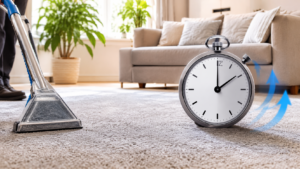
Most carpets take 6 to 12 hours to dry after professional hot water extraction, commonly called steam cleaning. Thick carpets, dense padding, and humid indoor conditions can extend drying time to 24 hours or longer. Low-moisture cleaning methods may dry within 1 to 4 hours, depending on the products and equipment used. Your exact carpet drying time depends on the cleaning method, carpet thickness, padding, indoor humidity, and air circulation.
Key Takeaways
- Hot water extraction typically takes 6 to 12 hours to dry, while some low-moisture methods dry within a few hours.
- Fans, air conditioning, and dehumidifiers help speed up carpet drying.
- Keep furniture and unnecessary foot traffic off the carpet until it is completely dry.
Average Carpet Drying Time by Cleaning Method
Carpet Cleaning Methods and Drying Time Comparison
| Comparison Factor | Hot Water Extraction (Steam Cleaning) | Low Moisture Cleaning |
| How It Works | Sprays heated water and cleaning solution into carpet fibers, then extracts dirty water using powerful suction. | Uses minimal water and specialized cleaning solutions to loosen soil, often through encapsulation. |
| Typical Drying Time | 6 to 12 hours, sometimes 24 hours or longer. | Approximately 1 to 4 hours. |
| Water Usage | Higher water usage. | Significantly lower water usage. |
| Cleaning Effectiveness | Effective for deep cleaning, heavy soil buildup, and embedded dirt. | Best suited for routine maintenance and light to moderate soil. |
| Best For | Residential carpets and heavily soiled commercial carpets. | Busy offices, commercial spaces, and areas where downtime must be minimized. |
| Factors Affecting Drying | Carpet thickness, padding, humidity, ventilation, and extraction efficiency. | Product selection, application method, carpet condition, and ventilation. |
| Main Advantage | Provides thorough cleaning by flushing dirt from carpet fibers. | Faster drying and less disruption to daily activities. |
Note: Actual drying times vary depending on carpet construction, moisture levels, indoor humidity, ventilation, and cleaning equipment.
Why Carpet Drying Time Varies
Indoor Humidity Levels
Humid air slows evaporation because it already contains more moisture. The EPA recommends maintaining indoor relative humidity between 30% and 50% when possible, with levels kept below 60% to help prevent mold growth.
During humid Louisville summers, carpet may take longer to dry, especially when indoor air circulation is limited. Running your air conditioner or a dehumidifier helps remove excess moisture from the air and supports faster drying.
Carpet Thickness and Padding
Thick, plush carpets generally take longer to dry than low-pile or Berber styles because their deeper pile can hold more moisture. Fiber type also matters. According to Coats Group’s textile fiber comparison, wool has a standard moisture regain of approximately 13–18%, compared with 4 — 4.5% for nylon. This means wool fibers can absorb and retain more moisture than nylon, although actual carpet drying times also depend on pile construction, backing, cleaning method, and airflow.
The padding underneath matters just as much. Padding can absorb water that passes through the carpet fibers and release it slowly. This means your carpet may feel dry on the surface while the padding underneath remains damp. The Carpet and Rug Institute notes that carpet cushion can be difficult to dry adequately after becoming wet, making proper water extraction and airflow essential.
Air Circulation
Moving air carries moisture away from carpet fibers and speeds up evaporation. A closed room with limited airflow can keep carpet damp much longer than a well-ventilated space.
Ceiling fans, floor fans, and properly functioning HVAC systems help circulate air and improve drying conditions.
How to Dry Wet Carpet Fast After Professional Cleaning
These steps can help reduce carpet drying time. Start as soon as your cleaning technician finishes, while following any specific instructions they provide.
- Turn on ceiling fans. Set them to a higher speed to keep air moving across the carpet.
- Add floor fans. Position box fans or air movers to circulate air across the carpet surface.
- Run your HVAC system. Use your air conditioner during humid weather or heating when appropriate to maintain comfortable indoor conditions and support air circulation.
- Use a dehumidifier. It removes excess moisture from indoor air, making it particularly useful in basements and humid rooms.
- Open windows on dry days only. Fresh outdoor air can help when its humidity is lower than the indoor humidity. Avoid opening windows when outdoor air is humid.
- Limit foot traffic. Keep shoes, pets, and unnecessary activity off damp carpet until it has dried. Follow your cleaner’s instructions if limited foot traffic is permitted.
Frequently Asked Questions
Can I walk on my carpet after professional cleaning?
It is best to wait until the carpet dries before walking on it regularly. Some professional cleaners allow limited foot traffic in clean socks or shoe covers, depending on the cleaning method and carpet material. Avoid outdoor shoes because they can transfer dirt onto freshly cleaned fibers. Follow your technician’s recommendations.
When can I put furniture back on my carpet?
Wait until the carpet is completely dry before replacing heavy furniture. Depending on the cleaning method and indoor conditions, this may take 6 to 12 hours or longer. If furniture must be returned earlier, place protective tabs or aluminum foil under the legs to prevent stains, dye transfer, or rust marks from reaching damp carpet.
What if my carpet still feels damp after 24 hours?
Contact your carpet cleaning company if your carpet remains noticeably damp after 24 hours. Poor extraction, thick padding, high humidity, or insufficient airflow may be contributing to the problem. Ask whether the technician can check moisture levels in the carpet and padding.
The EPA recommends drying wet materials within 24 to 48 hours when possible to reduce mold risk. This is general guidance for moisture control, not a guaranteed deadline for mold growth in professionally cleaned carpet. A persistent musty smell or damp padding deserves prompt attention.
Why did a stain come back after my carpet dried?
A stain that reappears after cleaning may be caused by wicking. This happens when leftover soil or cleaning residue beneath the carpet fibers moves toward the surface as moisture evaporates. Stains that return after drying may need additional professional treatment. Proper extraction and appropriate cleaning techniques help reduce the likelihood of wicking.
Does carpet dry faster in summer or winter?
Carpet does not automatically dry faster in either season. Indoor temperature, relative humidity, and airflow have a greater influence on drying time than the season itself.
During humid summers, air conditioning and dehumidifiers can help remove moisture from indoor air. In winter, heating can support evaporation when combined with proper ventilation and air circulation.
Does carpet cleaning leave a smell?
You may notice a mild cleaning-product smell or damp carpet odor immediately after professional cleaning. These smells should generally fade as the carpet dries and the room gets fresh air. A persistent musty odor may indicate trapped moisture, cleaning residue, or an underlying moisture problem. Contact your cleaning company if the smell does not improve after the carpet has dried.
Can I turn on the AC after carpet cleaning?
Yes. Running your air conditioner can help remove excess moisture from indoor air, particularly during humid weather. Combine it with ceiling fans or floor fans to improve air circulation. A dehumidifier can provide additional moisture control when needed.
Can carpet padding stay wet after professional cleaning?
Yes. Carpet padding can absorb moisture that passes through the carpet fibers, and it may take longer to dry than the surface. Proper water extraction and good ventilation help prevent excessive moisture from accumulating underneath. If the padding remains damp or develops a musty smell, contact your cleaning company to investigate.