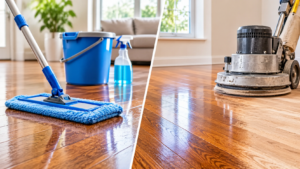
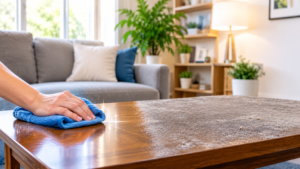
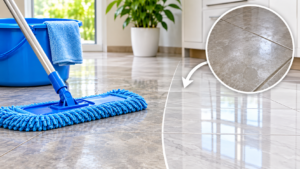
Hardwood cleaning removes dirt, grime, and residue from the floor’s existing protective finish, while floor refinishing removes the old finish and a thin layer of wood before applying a new protective coating. Cleaning maintains floors that are still in good condition, while refinishing restores floors with deeper scratches, worn finishes, and visible wood damage.
The right service depends on whether your floor needs a thorough cleaning, a fresh protective coat, or complete restoration. A third option, called buff and coat, falls between the two and can refresh a worn finish without sanding down to bare wood.
Key Takeaways
- Hardwood cleaning removes dirt, grime, and residue without removing the existing finish.
- Refinishing addresses deeper scratches, worn finishes, and damage that reaches the wood.
- A buff and coat renews a suitable existing finish without full sanding.
- Cleaning cannot repair scratches, gouges, or deep water damage.
- A professional floor inspection helps determine which service your hardwood needs.
What Is Professional Hardwood Cleaning?
Professional hardwood cleaning goes beyond regular sweeping and mopping. It removes accumulated dirt, sticky residue, and surface buildup that ordinary household cleaning may leave behind.
Over time, dust, pet hair, cleaning product residue, and tracked-in dirt can make hardwood floors look cloudy or dull. Professional cleaning targets this buildup while preserving the existing protective finish.
The Cleaning Process
A professional hardwood cleaning service typically starts by removing loose dirt and debris through vacuuming or sweeping. The floor is then cleaned using a suitable wood-floor cleaning solution and specialized equipment.
Professional cleaners use controlled moisture to remove accumulated grime without unnecessarily soaking the floor. This helps protect the wood and reduces the risk of moisture-related damage.
The exact process depends on the floor’s finish, condition, and manufacturer’s care recommendations.
Learn more about our professional hardwood floor cleaning service.
What Cleaning Can Fix
Professional hardwood cleaning can improve the appearance of floors affected by:
- Sticky residue from cleaning products.
- Surface dirt and accumulated grime.
- Dust and pet hair buildup.
- Cloudy films caused by improper cleaning products.
- Light scuff marks and surface buildup.
However, cleaning cannot repair scratches that penetrate the protective finish, deep gouges, peeling finish, or gray and black stains caused by moisture damage.
If the floor looks dull because its protective finish has worn down, a buff and coat or full refinishing may be necessary.
How Often Should You Schedule Professional Hardwood Cleaning?
Many households benefit from professional hardwood cleaning once or twice a year, although there is no universal schedule.
Homes with pets, children, heavy foot traffic, or frequent entertaining may need more frequent attention. Households with lighter traffic may need professional cleaning less often. Our comparison of weekly vs. monthly house cleaning can help you set a schedule for the rest of your home.
Between professional visits, maintain your hardwood floors by:
- Sweeping or vacuuming regularly to remove abrasive dirt.
- Cleaning spills promptly with a soft, dry or slightly damp cloth.
- Using cleaning products approved for your floor’s finish.
- Placing protective pads beneath furniture legs.
- Avoiding excessive water and steam mops.
A regular residential cleaning plan can also help control everyday dust and dirt, although specialized hardwood floor care may still be necessary.
What Is Hardwood Floor Refinishing?
Hardwood floor refinishing is a restoration process that removes the existing finish and sands away a thin layer of wood to expose a fresh surface. Contractors then apply stain, if desired, followed by protective finish coats.
Unlike cleaning, refinishing addresses damage that affects the wood itself or extends beyond the existing protective coating.
It can restore the appearance of worn hardwood, remove many surface-level scratches, and give homeowners the option to change their floor color.
Sanding Down to Bare Wood
The refinishing process begins with sanding the floor using professional floor sanders. Contractors typically work through progressively finer sanding grits to remove the old finish, surface scratches, and minor imperfections.
Sanding removes a small amount of wood, so the process must be handled carefully, particularly with engineered hardwood or floors that have already been refinished multiple times.
Once sanding is complete, the surface is prepared for staining or sealing.
Staining for a New Color
After sanding, homeowners can keep the natural wood appearance or choose a different stain color.
For example, an oak floor with an orange or yellow tone can be transformed with a darker brown stain. However, the final appearance depends on the wood species, grain pattern, and how the wood absorbs the stain.
Testing stain samples directly on the floor before applying the final color helps avoid unexpected results.
Sealing With a Protective Topcoat
After staining, contractors apply a protective finish, commonly polyurethane, to seal the wood and protect it from everyday wear.
Depending on the product and application requirements, multiple coats may be necessary, with appropriate preparation between coats.
The protective finish helps resist everyday scuffs, dirt, and minor spills. However, no finish makes hardwood completely scratchproof or waterproof.
Proper maintenance and following the manufacturer’s curing instructions help extend the life of the refinished floor.
When Does a Hardwood Floor Need Full Refinishing?
Full refinishing may be necessary when:
- Scratches have penetrated the protective finish and exposed bare wood.
- The finish has worn away in busy walkways.
- The floor has extensive surface damage that a maintenance coat cannot address.
- The wood has discoloration or staining that can be removed through sanding.
- The existing finish is peeling or failing across large areas.
Not every worn floor needs complete refinishing. If the existing finish is still intact and suitable for recoating, a buff and coat may be a more practical option.
What Is the Difference Between Buff and Coat and Full Refinishing?
A buff and coat, sometimes called a screen and recoat, is a maintenance treatment that refreshes the existing protective finish without sanding the floor down to bare wood.
The contractor lightly abrades the existing finish to prepare the surface for a new protective coating. After removing the resulting dust, a compatible finish is applied.
This option is useful when hardwood floors have minor surface wear, light scuffing, or a dull appearance but the existing finish remains in good condition.
However, buff and coat is not suitable for every floor. Peeling finishes, deep scratches, extensive wear, or contamination from incompatible cleaning products can prevent proper adhesion.
A professional inspection is important before choosing this treatment.
Hardwood Cleaning vs. Buff and Coat vs. Refinishing: Key Differences
| Factor | Professional Cleaning | Buff and Coat | Full Refinishing |
| Main purpose | Remove dirt and residue | Refresh the protective finish | Restore worn or damaged wood |
| Removes old finish | No | Lightly abrades the existing finish | Yes |
| Sands down to bare wood | No | No | Yes |
| Repairs deep scratches | No | No | Can remove many surface-level scratches |
| Changes floor color | No | Usually no | Yes, with optional staining |
| Dust production | Minimal | Low | Higher, although dust containment helps |
| Typical cost | Generally the least expensive | Around 1–2.50 per sq. ft. | Around 3–8 per sq. ft. |
| Project time | Usually a few hours | Often one day or less | Commonly several days |
Cost note: These are approximate US pricing estimates, not guaranteed quotes. Actual costs depend on location, floor condition, project size, labor, repairs, and finish selection. Cleaning prices vary by service provider and should be quoted separately.
How Much Downtime Should You Expect?
Professional cleaning usually requires the least downtime. Many floors can be used again within a few hours, depending on the cleaning products and drying conditions.
A buff and coat may require the floor to remain unused while the new coating dries. The exact waiting period depends on the finish used.
Full refinishing takes longer because sanding, staining, and applying multiple finish coats require separate preparation and drying periods. The project can take three to five days or longer, depending on the floor and finish system.
Light foot traffic may be permitted before the finish is fully cured. Rugs and heavy furniture should remain off the floor until the manufacturer’s recommended curing period has passed.
How to Choose the Right Service for Your Hardwood Floors
The best way to determine whether your hardwood floors need cleaning, a buff and coat, or full refinishing is to examine the condition of the existing finish.
Here are some practical signs to look for.
Choose professional hardwood cleaning if:
- Your floor looks cloudy because of dirt or cleaning residue.
- The surface feels sticky after mopping.
- You notice accumulated dust, grime, or pet-related buildup.
- The protective finish is still intact.
Consider a buff and coat if:
- The floor looks dull despite being clean.
- There are light surface scratches and scuffs.
- The protective finish shows minor wear but has not completely failed.
- You want to refresh the floor without sanding it down to bare wood.
Consider full refinishing if:
- Scratches expose the bare wood underneath.
- The finish has worn away in high-traffic areas.
- There are deeper surface imperfections.
- The floor has staining or discoloration that requires sanding.
- The existing finish is extensively peeling or failing.
A scratch that catches your fingernail may indicate deeper damage, but it does not automatically mean the entire floor needs refinishing. A professional should assess the depth and extent of the damage before recommending a treatment.
Also consider the floor’s construction. Engineered hardwood, for example, has a real wood wear layer over a core, which limits how much sanding it can tolerate.
When in doubt, have a flooring professional inspect the surface before committing to a restoration service.
For everyday maintenance, see our guide on what to use for hardwood floor cleaner.
How Long Does Hardwood Floor Refinishing Last?
A professionally refinished hardwood floor can last many years before requiring another full refinishing project. Its lifespan depends on the wood species, finish quality, household traffic, pets, and maintenance routine.
Homes with heavy foot traffic or large pets may experience faster surface wear, especially in entryways, hallways, and other frequently used areas.
To extend the life of a refinished floor:
- Sweep or vacuum regularly to remove abrasive dirt.
- Use manufacturer-approved hardwood floor cleaners.
- Place rugs in entryways and busy walkways.
- Use furniture pads to prevent scratches.
- Clean spills promptly.
- Avoid steam mops and excessive moisture.
Regular maintenance helps preserve the new finish and may delay the need for another major restoration project.
Frequently Asked Questions
Can I stay home while a crew refinishes my floors?
You may be able to stay home, but it depends on the size of the project, ventilation, and the finish being applied. Sanding creates dust, while some finishing products produce strong odors and fumes.
Some households choose to stay elsewhere during the final coating and initial drying period. Follow the contractor’s safety recommendations and the finish manufacturer’s ventilation instructions.
Can you refinish engineered hardwood?
Yes, some engineered hardwood floors can be refinished, but it depends on the thickness of the real wood wear layer and the manufacturer’s specifications.
Floors with thicker wear layers may tolerate sanding, while thin veneers may allow only limited refinishing or none at all. A flooring professional should inspect the floor before recommending sanding.
Will refinishing get rid of pet stains?
Refinishing can remove some pet stains if the discoloration is limited to the surface or the upper portion of the wood.
However, pet urine that penetrates deeply into the boards can cause persistent dark staining and odor. In these situations, sanding alone may not solve the problem, and replacing affected boards may be necessary.
Is it worth refinishing hardwood floors before selling a house?
It can be worthwhile if the floors have visible wear, scratches, or discoloration that makes the home look poorly maintained.
Refinishing can improve the floor’s appearance and help create a better impression during showings. However, the decision should depend on the floor’s condition, project cost, and local buyer expectations. It does not guarantee a specific increase in resale value.
Can a steam mop damage hardwood floors?
Yes. Steam mops can expose hardwood to excessive heat and moisture, which may damage the protective finish and allow moisture to enter the wood.
Over time, this can contribute to discoloration, swelling, warping, and finish deterioration. Use cleaning products and methods recommended for your specific hardwood floor instead.
Does professional hardwood cleaning remove scratches?
No. Professional cleaning removes dirt, residue, and surface buildup, but it cannot repair scratches that have penetrated the protective finish or damaged the wood.
Light surface scuffs may become less noticeable after cleaning, but deeper scratches may require a maintenance coat, buff and coat, or full refinishing.
How much does hardwood floor cleaning cost compared to refinishing?
Professional hardwood cleaning is generally less expensive than refinishing because it does not involve sanding, staining, or applying a new finish. To see what drives cleaning prices in general, read how much a cleaning service costs.
A buff and coat may cost approximately 1–2.50 per square foot, while full refinishing commonly ranges from 3–8 per square foot in the United States. Actual prices vary by location, floor condition, and project requirements.
Keep Your Hardwood Floors Looking Their Best
Choosing between hardwood cleaning and floor refinishing comes down to the condition of your floor. If dirt and residue are the main problems, professional cleaning may be all you need. If the protective finish is worn but still suitable for recoating, a buff and coat can refresh its appearance. For deeper scratches, exposed wood, and extensive finish damage, full refinishing may be the better solution.
Before investing in restoration, have your floors professionally assessed to determine which treatment makes the most sense for their condition. The right maintenance approach can help preserve your hardwood floors and keep them looking their best for years.